
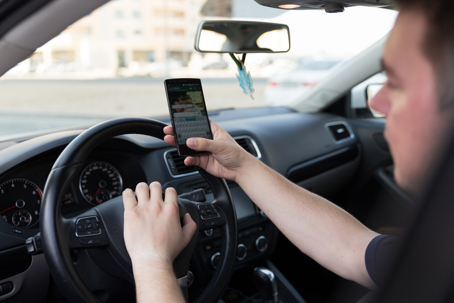
The driver who hit you may look you in the eye and say they weren’t on their phone. The insurance adjuster may tell you there’s no way to prove otherwise, then suggest you were partly to blame. In that moment, it can feel like the truth of what happened is slipping away.
In distracted driving cases, the other driver’s denial is almost predictable. What matters is the trail they left behind. Modern vehicles, phones, cameras, and witnesses often record more than people realize. Drawing on years of investigative work and case preparation at Law Offices Of Vic Feazell, P.C., we know how to uncover that trail and connect it to the law in Texas.
Why Proving Distraction Is Harder Than It Seems
Proving that a driver was distracted is hard because distraction is usually invisible after the crash. There’s no blood test for texting, and almost no one admits, “I was looking at my phone” when they know that admission could cost them money.
Texas uses a modified comparative fault system, called proportionate responsibility, under Texas Civil Practice and Remedies Code § 33.001. If an insurance company can convince a jury that you were more than 50 percent at fault, you’re barred from recovering damages at all. Even if they can push a small percentage of fault onto you, they reduce what they have to pay.
That is why insurers look for ways to argue you were speeding, following too closely, or “not paying attention either.” Strong evidence to prove fault in a distracted driving accident does two critical things: it shows the other driver breached their duty of care, and it undercuts these shared-fault arguments before they gain traction.
The Legal Framework Behind a Distracted Driving Claim in Texas
To understand what evidence matters, it helps to understand the rules that apply. Every driver in Texas has a duty of care, which means they must act as a reasonably careful driver would under the circumstances. Distracted driving is about violating that duty.
Some distractions are directly addressed by statute. Texas Transportation Code § 545.4251, effective September 1, 2017, makes it illegal statewide to read, write, or send electronic messages while operating a moving motor vehicle. When a driver violates this law and causes a crash, that violation can support a negligence per se theory. Negligence per se means the act is considered negligent because it broke a safety law designed to protect people like you from the type of harm you suffered.
Other distractions are not tied to a specific statute but can still be negligent. Eating, grooming, reaching into the back seat, or turning around to deal with a pet are all examples. These are evaluated under common law negligence: did the driver act as a reasonably prudent driver would, or did they let a distraction take their attention off the road?
Texas has heightened rules for some drivers and locations. Under Texas Transportation Code § 545.424, drivers under 18 are prohibited from using any wireless communication device while driving. Under § 545.425, all drivers are barred from using handheld devices in school zones. Austin and San Antonio have gone further, with local ordinances that ban handheld phone use entirely. Evidence that a driver violated one of these stricter rules can be especially powerful in a civil injury claim.
Digital Evidence: What Phones & Vehicles Record
Digital records often provide the clearest evidence to prove fault in a distracted driving accident because they carry specific timestamps and are difficult to explain away.
Cell Phone Records and App Data
With the right legal process, we can seek cell phone records from carriers that show call logs, text message timestamps, and sometimes data usage around the time of the crash. These records don’t always show the content of messages, but they can confirm whether the phone was in active use at a critical moment.
In some cases, we may work with cell phone forensics professionals to examine the device itself. A forensic review can uncover deleted messages, app activity logs, and other usage data that carriers don’t provide in standard responses. When a driver insists they weren’t using their phone, and the digital record shows continuous messaging or social media activity in the minute before impact, their denial loses credibility.
Social Media and Online Activity
Posts, live streams, comments, or stories made around the time of the collision can also matter. If the at-fault driver was broadcasting a video or posting updates seconds before the crash, those timestamps can directly contradict their story.
Our job in a distracted driving claim is to map those timestamps against the known time of impact. When there’s alignment, that digital footprint becomes another piece of the evidentiary puzzle.
Event Data Recorder (EDR) or “Black Box” Information
Many modern vehicles have an event data recorder, sometimes called a “black box.” The EDR captures technical information from the seconds before a collision, such as speed, brake application, and steering inputs.
EDR data is powerful because it speaks to what the driver did or didn’t do. If a driver insists they slammed on the brakes and swerved to avoid you, but the EDR shows no braking and no steering input until impact, that pattern is consistent with cognitive or visual distraction. To obtain this data, we often need formal requests or subpoenas, and sometimes coordination with accident reconstruction professionals to interpret the information accurately.
Physical and Scene Evidence That Tells the Story
Not every distracted driving case hinges on digital records. The crash scene itself often tells a story about whether the driver was paying attention.
Skid Marks and Vehicle Damage Patterns
When an attentive driver sees a hazard, they usually brake or swerve. That reaction leaves evidence: long skid marks, curved tire tracks, or specific impact angles. If there are no skid marks at all in a rear-end collision, or if the skid marks are very short, it can suggest that the driver didn’t react in time because their attention was elsewhere.
Damage patterns on the vehicles, debris fields, and the final resting positions of the cars also help show whether the driver tried to avoid the crash or never saw it coming. We often pair this physical evidence with EDR data to reinforce conclusions.
Objects Inside the At-Fault Vehicle
Sometimes non-phone distractions are sitting in plain sight. Open food containers, spilled drinks, makeup scattered across the console, or a phone lying unlocked in the driver’s hand can all be significant. Photographs taken at the scene, ideally before vehicles are moved, can capture these details.
If you’re physically able after a crash, or someone with you can help, taking photos of both vehicles and the surroundings can be valuable later. We understand that many people are too injured to do this, which is why quick investigation after the fact becomes so important.
Police Reports and On-Scene Observations
Responding officers may document signs of distraction in their reports. That can include a citation for violating Texas Transportation Code § 545.4251, notes that the driver admitted looking at their phone, or observations that the driver was still holding a device.
While a police report is not the final word in a civil case, insurers pay attention to it. When an officer records a distraction-related citation or a candid statement from the other driver, it strengthens the foundation of your claim under the preponderance of the evidence standard, which means “more likely than not.”
Witness Testimony and Expert Analysis
People who saw the crash, and professionals who analyze crashes, can fill in gaps that physical and digital evidence leave behind.
Eyewitness Accounts
Eyewitnesses can include pedestrians, cyclists, passengers, other drivers, or nearby workers. They might have seen the at-fault driver looking down, holding a phone, eating, or otherwise ignoring the road in the seconds before impact.
Neutral third-party witnesses often carry significant weight with insurers and juries. We work to locate these witnesses quickly, get accurate statements while memories are fresh, and compare what they saw with the physical and digital evidence already collected.
Accident Reconstruction Professionals
Accident reconstruction involves using engineering principles, physical evidence, and data like EDR downloads to determine how and why a crash happened. Reconstruction professionals are trained to analyze skid marks, crush damage, vehicle weights, and time-distance calculations to build a timeline.
In a distracted driving case, reconstruction can help connect a moment of inattention to the collision. For example, they may calculate how much time a reasonably attentive driver would have had to respond to a hazard and show that the at-fault driver failed to react in that window, consistent with distraction.
Digital and Phone Forensics
When necessary, we may involve digital forensics specialists to go beyond carrier records. These professionals can image a phone and recover deleted content, examine app usage logs, and identify whether certain functions, like navigation or streaming, were active at the time.
This type of analysis can be especially important if the other driver claims someone else was using their phone or that an apparent message timestamp was automatic and not hands-on activity. Forensics helps us separate those explanations from the actual data.
Why Evidence Disappears Quickly and What That Means for Your Claim
Even strong evidence can be lost if it is not preserved quickly. Many of the most useful records in a distracted driving case are only stored for short periods or are easily altered.
Surveillance and Camera Footage
Traffic cameras, business security systems, and residential doorbell cameras often capture parts of a collision or the moments before it. However, many of these systems overwrite footage automatically, sometimes within days or even hours.
If no one acts to preserve that footage, it may be gone by the time you realize it existed. One of our early priorities in a case is to identify likely camera sources and send evidence preservation requests before the normal deletion cycle runs.
Spoliation Notices and Evidence Preservation
In Texas, a spoliation notice is a formal communication that tells a person or business they must preserve certain evidence because a claim is being pursued. This might be sent to a phone carrier, an employer that owns the vehicle, a business with security cameras, or another third party.
Once a proper spoliation notice is in place, intentionally destroying or failing to preserve evidence can have serious consequences in a civil case. Sending effective notices and following up on them typically requires attorney involvement, because they must be specific, timely, and directed to the right parties.
Legal Tools That Individuals Don’t Have Alone
Some of the most important evidence in a distracted driving claim is not available to the public on request. Subpoenas or court orders may be needed to obtain detailed phone records, EDR data, or certain business records. Coordinating with accident reconstruction and forensic professionals also requires planning and resources.
At Law Offices Of Vic Feazell, P.C., we manage these steps as part of preparing a case. We gather, organize, and analyze the evidence, and we handle the communication with insurance companies so our clients don’t have to navigate complex processes on their own.
How Strong Evidence Shifts the Fault Conversation
Insurers often start with the assumption that both drivers share blame. They may argue that you could have braked sooner, watched more carefully, or avoided the crash. Under Texas’s modified comparative fault rule, they only have to raise enough doubt to reduce their payout.
When we can present a clear evidentiary record showing distraction, that conversation changes. Cell phone logs, EDR data showing no reaction, photos from the scene, consistent witness accounts, and a structured accident reconstruction work together to meet the preponderance of the evidence standard.
Instead of debating vague impressions, we can point to independent records and physical facts. That reduces the space for insurance adjusters to shift blame onto you and supports a claim for the full value of your injuries, medical costs, lost wages, and other losses under Texas law.
Taking Your Next Step After a Distracted Driving Crash
The strength of a distracted driving claim in Texas often comes down to how much evidence can be gathered and how quickly it is preserved. Phone records age, memories fade, cameras overwrite their footage, and vehicles are repaired or scrapped. The sooner an investigation begins, the more complete that picture can be.
We understand that after a serious crash, it is hard to focus on anything beyond your recovery, medical appointments, and immediate bills. Our role is to shoulder the investigative and legal work: preserving evidence, coordinating with reconstruction and forensic professionals, and pushing back when insurers try to minimize or shift fault.
If you believe a distracted driver caused your injuries and you have questions about what evidence might be available in your situation, we can walk through your options and explain how the process works. You can reach our team at Law Offices Of Vic Feazell, P.C. by calling (254) 938-6885 to discuss your circumstances and learn what the next steps could look like.